The Sedgewick July 1st Celebration is seeking input from the Community for the 2018 July 1st Celebration! (more…)
The Town of Sedgewick
Filter Articles
- Browse By Categories
- Announcements (135)
- Celebration Committee (1)
- Council (80)
- Fire Services (4)
- Town Events (13)
- Utilities (1)
Author Archive
New Boulevard Bylaw! New Application Requirements!
March 13th, 2018
Town Council deemed it important to maximize public safety and to maintain the aesthetic appeal of the Town boulevards.
Boulevard Bylaw 548/18 regulates that no person other than the Town shall:
- Pave any or all of a boulevard or back alley unless and until a permit to do so has been authorized.
- Be responsible for the repair of boulevard sidewalks and fire hydrants.
- Plant a tree on a boulevard or a back alley
- Prune, repair, trim or perform any work on a boulevard tree
Property owners are responsible to maintain any boulevard or back alley adjacent to the property they own or occupy.
A property owner may request pruning or removal of a tree adjacent to their property by submitting an application to the CAO.
View full text of the Bylaw: Boulevard Bylaw 548/18
Application for pruning or for tree removal: Application for Tree Pruning or Removal
Black Knot Disease! Time to Prune!
February 20th, 2018
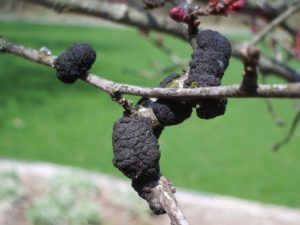
Black Knot, caused by the fungus Apiosporina morbosa, is a very common disease of plants in the genus Prunus (all Cherry genus, Mayday, Plum and Apricot). This disease reduces the aesthetic value of affected specimens, as infections spread rapidly. High levels may result in the eventual death of the plant.
What can be done to control Black Knot?
- Removal of sources of inoculum (prevents population build up)
- Prune out all knot-bearing branches during late fall, winter or very early spring when plants are dormant and knots are easy to see.
- Remove infected branches to at least 15-20 cm (6-8 inches) below knot. NOTE: It is preferable to prune an infected branch further back to an appropriate location, such as a healthy collar, rather than leave a stub
- As a precaution, cutting blades should be cleaned and disinfected after pruning, if possible, especially if cuts have been made through obviously infected material
- For knots on scaffold branches or trunks that can’t be removed, cut away diseased tissue down to good wood and at least 1 cm (1/2 inch) beyond the edge of the knot
- Failure to remove branches beyond the internal growth will result in re-growth of the fungus.
DISEASED WOOD MUST BE DESTROYED IMMEDIATELY (burned, buried or removed from site). Diseased knots can produce and release spores for up to 4 months after removal. Proper composting can help to accelerate the breakdown of infected materials
The most distinguishing symptom of Black Knot is the characteristic black, tar-like swellings that develop on branches of the infected plant.
Please help stop the spread of this disease in our community!